Understanding Hernia and Why Treatment is Important
A hernia occurs when an internal organ or tissue pushes through a weak spot in the surrounding muscle wall. It commonly appears in the abdominal or groin region and may initially present as a small bulge. While some hernias remain mild, many gradually increase in size and cause discomfort, pain, or difficulty in daily activities.
In most cases, hernia surgery is the only definitive treatment to repair the weakened muscle wall and prevent complications. Delaying treatment can sometimes lead to serious conditions such as obstruction or strangulation, where blood supply to the tissue is affected.
With advancements in medical science, treatment has become safer and more precise. One of the most significant innovations in this field is robotic-assisted surgery, which is transforming how hernias are treated. It allows surgeons to perform delicate procedures with enhanced accuracy, better visualization, and improved patient outcomes. In the hands of an experienced specialist like Dr. Vishal Soni, patients receive advanced care that focuses on safety, precision, and faster recovery.
What is Robotic Hernia Surgery?
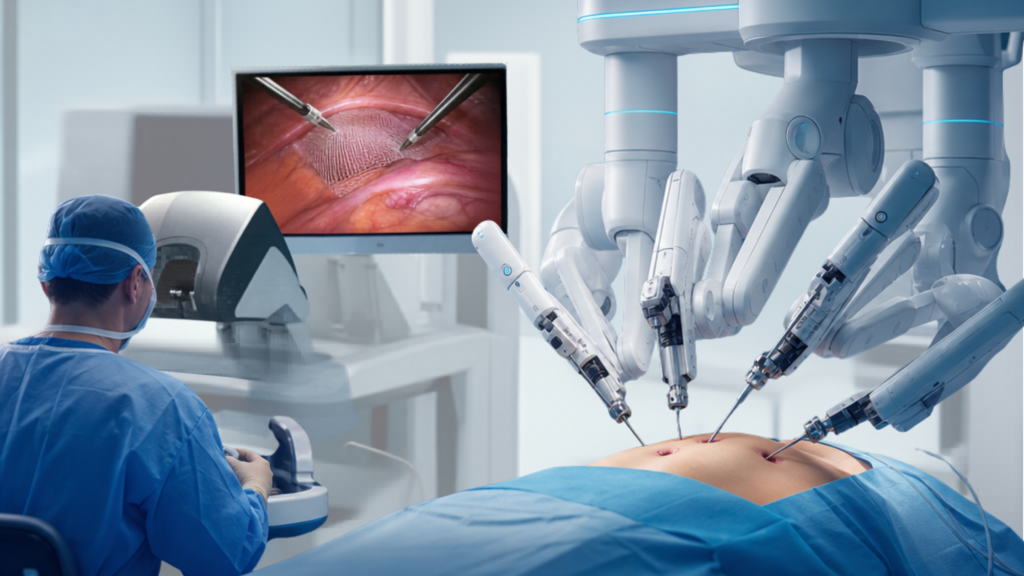
Robotic hernia surgery is a minimally invasive technique where the surgeon uses a robotic system to perform the operation with high precision. The surgeon controls robotic instruments that replicate hand movements but with greater stability and accuracy.
This method is commonly used for repairing different types of hernias, including inguinal, umbilical, and incisional hernias.
How Robotic-Assisted Surgery Works
During the procedure, small incisions are made to insert a high-definition camera and robotic instruments. The surgeon operates from a console, viewing a magnified 3D image of the surgical area. This allows for extremely precise movements while repairing the hernia defect.
Difference Between Traditional and Robotic Techniques
Traditional open surgery requires a larger incision and longer recovery time. Laparoscopic surgery uses small incisions but has limited instrument flexibility. In contrast, robotic surgery combines minimal invasiveness with superior precision and control, offering a balanced and advanced approach.
Benefits of Robotic Hernia Surgery
Robotic-assisted techniques provide several advantages for patients undergoing hernia repair.
Precision, Safety, and Faster Recovery
- Enhanced surgical accuracy
- Better control in complex cases
- Reduced risk of complications
- Faster return to daily activities
Reduced Pain and Minimal Scarring
Smaller incisions lead to less post-operative pain and minimal visible scarring, making recovery more comfortable and cosmetically favourable.
Who is a Suitable Candidate for Robotic Hernia Surgery?
Not every patient requires robotic surgery, but it is especially beneficial in selected cases where precision and minimally invasive repair are important.
Types of Hernias Treated with Advanced Techniques
- Inguinal hernia
- Umbilical hernia
- Incisional hernia
- Recurrent hernia cases
Factors That Determine Eligibility
- Overall health condition of the patient
- Size and complexity of the hernia
- Previous surgical history
- Surgeon’s evaluation and recommendation
Recovery After Robotic Hernia Surgery
Recovery is generally smoother compared to traditional surgery due to minimal tissue damage and smaller incisions.
What to Expect Post-Surgery
Most patients can resume light activities within a few days and return to normal routines within a short recovery period, depending on individual healing.
Tips for a Smooth and Faster Recovery
- Follow post-operative instructions carefully
- Avoid heavy lifting for a few weeks
- Maintain a balanced diet
- Attend follow-up appointments regularly
Patient-Focused Hernia Care with Modern Techniques
Dr. Vishal Soni is known for his expertise in advanced hernia management and minimally invasive surgical techniques. His patient-focused approach ensures accurate diagnosis, personalized treatment planning, and safe surgical outcomes. By integrating modern technology with clinical experience, he aims to deliver the best possible results for patients requiring hernia surgery.
Robotic hernia surgery represents a major advancement in modern medicine, offering patients a safer, more precise, and more comfortable path to recovery.