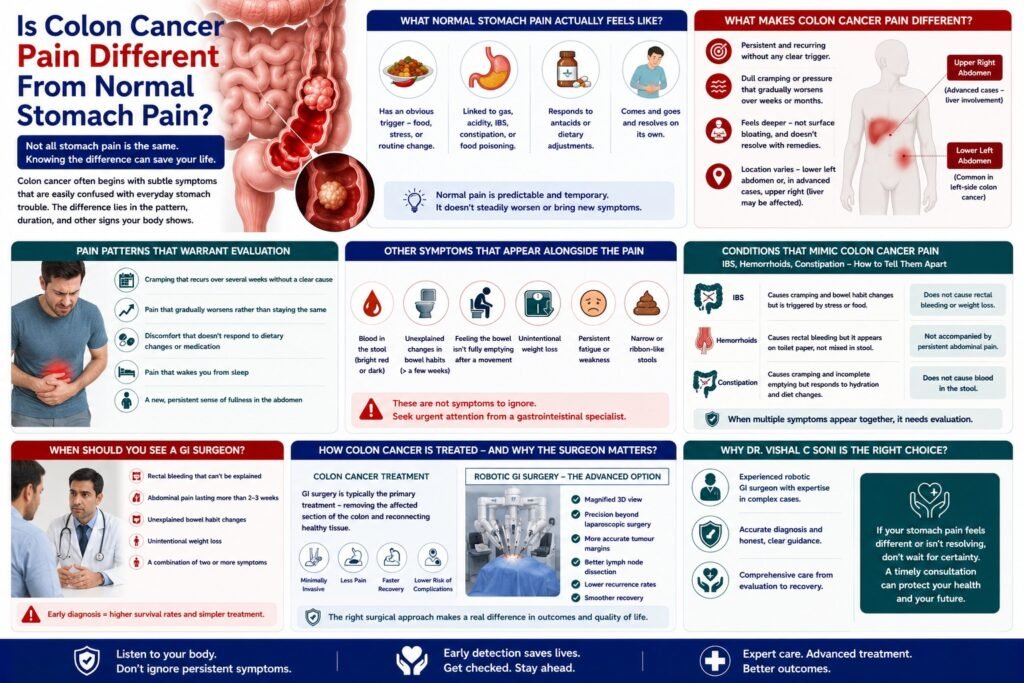
Is Colon Cancer Pain Different From Normal Stomach Pain?
Why We Dismiss Stomach Pain and Why That Can Be Dangerous?
Stomach pain is one of those things most people learn to live with. A heavy meal, a stressful week, a bout of acidity and suddenly there’s that familiar cramping that disappears as quickly as it came. So we wait it out, take an antacid, and move on.
But what happens when the pain doesn’t follow that pattern? When it keeps coming back, feels different, or arrives alongside other changes your body is making?
Colon cancer one of the most common gastrointestinal cancers often begins with symptoms so subtle they are easily confused with everyday stomach trouble. That confusion is exactly what makes it dangerous.
What Normal Stomach Pain Actually Feels Like?
Normal gastrointestinal pain has an obvious trigger a specific food, stress, or a change in routine. It responds to antacids or dietary adjustments, and crucially, it resolves. Common causes include gas, acid reflux, IBS, constipation, or food poisoning.
The key word is predictable. Normal stomach pain comes and goes without steadily worsening or bringing new symptoms along with it. When pain stops being predictable that’s when it deserves closer attention.
What Makes Colon Cancer Pain Different?
Colon cancer pain doesn’t always feel dramatically different and that’s precisely what makes it easy to overlook. But there are qualities that set it apart.
It tends to be persistent rather than occasional a dull cramping or pressure that returns regularly without any clear dietary trigger. Unlike the brief discomfort of gas or indigestion, it lingers and gradually worsens over weeks or months. It also feels deeper less like surface bloating and more like an internal ache that doesn’t resolve with standard remedies.
Location matters too. Cancer in the lower left colon may cause cramping in the lower left abdomen. In advanced cases where gastrointestinal cancer has spread to the liver, patients sometimes notice pressure or fullness in the upper right abdomen rarely associated with routine stomach complaints.
Pain patterns that warrant evaluation:
- Cramping that recurs over several weeks without a clear cause
- Pain that gradually worsens rather than staying the same
- Discomfort that doesn’t respond to dietary changes or medication
- Pain that wakes you from sleep
- A new, persistent sense of fullness in the abdomen
Other Symptoms That Appear Alongside the Pain
Colon cancer rarely presents with pain alone. When abdominal discomfort arrives alongside any of the following, seek urgent attention from a gastrointestinal specialist.
- Blood in the stool bright red or dark and tarry
- Unexplained changes in bowel habits lasting more than a few weeks
- Feeling the bowel isn’t fully emptying after a movement
- Unintentional weight loss without a change in diet
- Persistent fatigue or weakness
- Narrow or ribbon-like stools that represent a change from your normal pattern
These are not symptoms to monitor casually they are signals your gastrointestinal system needs professional evaluation.
Conditions That Mimic Colon Cancer Pain
IBS, Hemorrhoids, Constipation How to Tell Them Apart
Several common, non-cancerous conditions closely resemble colon cancer symptoms which is why it goes undetected for so long in many patients.
IBS causes cramping and bowel habit changes but is triggered by stress or food and never causes rectal bleeding or weight loss. Hemorrhoids cause rectal bleeding but it appears on toilet paper, not mixed in stool, and isn’t accompanied by persistent abdominal pain. Constipation causes cramping and incomplete emptying but responds to hydration and diet changes, without causing blood in the stool.
The critical distinction these conditions don’t typically cause abdominal pain, rectal bleeding, bowel changes, and weight loss all together. When multiple symptoms appear simultaneously, a GI surgeon needs to evaluate why.
When Should You See a GI Surgeon?
See a GI surgeon without delay if you experience rectal bleeding that can’t be explained, abdominal pain persisting beyond two to three weeks, unexplained bowel habit changes, unintentional weight loss, or a combination of two or more of the above symptoms.
Caught early when cancer is confined to the colon’s inner lining survival rates are significantly higher and GI surgery is far less complex. A GI surgeon can evaluate symptoms, order the right investigations, and arrive at a clear diagnosis before the situation escalates.
How Colon Cancer Is Treated And Why the Surgeon Matters?
When colon cancer is confirmed, GI surgery is typically the primary treatment removing the affected section of the colon and reconnecting healthy tissue to restore normal gastrointestinal function. Today’s minimally invasive approaches mean significantly reduced recovery time, less pain, and lower complication risk compared to traditional open surgery.
For complex cases, a robotic GI surgeon offers the most advanced option available. Robotic assisted GI surgery provides a magnified three-dimensional view of the surgical field with instruments that move with precision beyond conventional laparoscopic tools. In colon cancer surgery where accurate tumour margins and careful lymph node dissection directly influence outcomes that precision is a meaningful clinical benefit, not just a technical one.
Why Dr. Vishal C Soni Is the Right Choice for Gastrointestinal Care?
Dr. Vishal Soni is an experienced robotic GI surgeon with deep expertise in diagnosing and treating complex gastrointestinal conditions including colon cancer. From initial symptom evaluation through to GI surgery and post-operative care, his approach is built on one principle every patient deserves clarity, honesty, and access to the most advanced treatment available.
If your stomach pain feels different, or symptoms aren’t resolving the way they normally would, don’t wait for certainty before seeking an opinion. A timely consultation with a GI surgeon is always the right call.