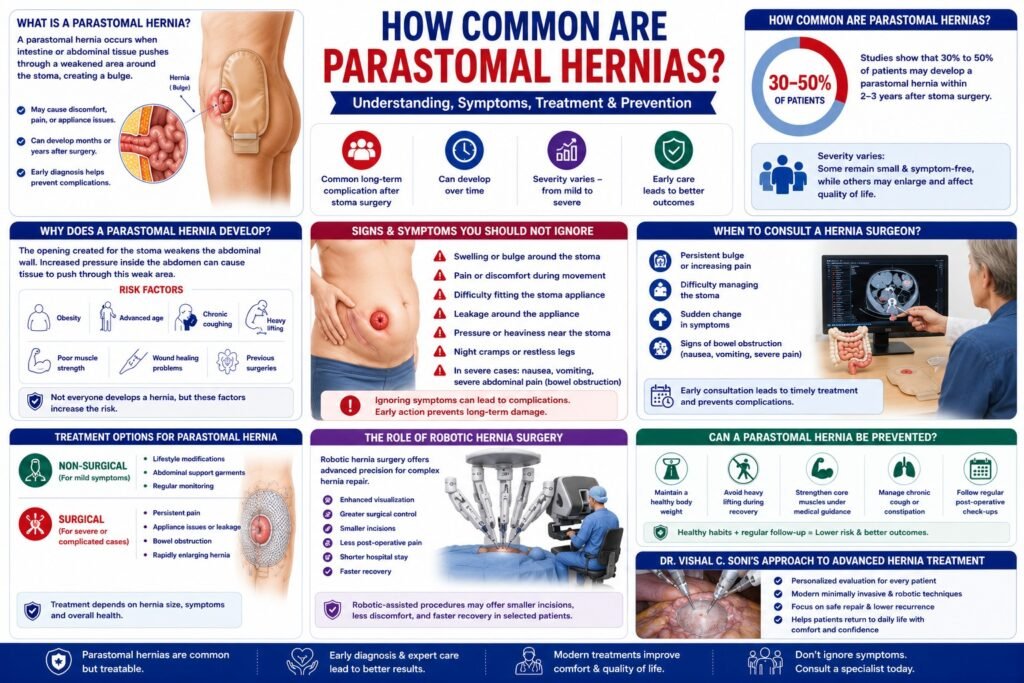
How Common Are Parastomal Hernias?
What Is a Parastomal Hernia?
A parastomal hernia is one of the most common complications that can occur after stoma surgery. It develops when part of the intestine or abdominal tissue pushes through a weakened area in the abdominal wall around the stoma, creating a visible bulge. While some people experience only mild discomfort, others may notice pain, difficulty wearing a stoma appliance, or changes in bowel function. The condition may develop gradually over months or even years after surgery, making regular follow-up care important.
Although not every parastomal hernia requires immediate treatment, early diagnosis helps prevent the condition from becoming more complex. Understanding the symptoms and available treatment options allows patients to make informed decisions and seek medical care at the right time.
Why Does a Parastomal Hernia Develop?
A stoma naturally creates an opening in the abdominal wall, and this area can become weaker over time. Increased pressure inside the abdomen may gradually stretch the surrounding muscles, allowing abdominal contents to protrude.
Several factors can increase the likelihood of developing a parastomal hernia, including:
- Obesity
- Advanced age
- Chronic coughing
- Heavy lifting
- Poor muscle strength
- Wound healing problems after surgery
Not everyone with these risk factors develops a hernia, but understanding them can help patients take preventive measures.
How Common Are Parastomal Hernias?
Parastomal hernias are considered one of the most frequent long-term complications following stoma formation. Studies have shown that many patients may develop some degree of parastomal hernia over time, although the severity varies from person to person. Some hernias remain small and cause few symptoms, while others gradually enlarge and interfere with daily activities.
Regular follow-up with an experienced hernia surgeon is important, especially if a patient notices swelling, discomfort, or changes around the stoma site. Early assessment allows doctors to monitor the condition and recommend the most appropriate treatment before complications arise.
Factors That Increase the Risk of Developing a Parastomal Hernia:
Certain factors may increase the chances of developing this condition:
- Excess body weight
- Smoking
- Repeated heavy lifting
- Chronic constipation
- Long-term coughing
- Weak abdominal muscles
- Previous abdominal surgeries
Managing these factors where possible can help reduce the risk of progression.
Signs and Symptoms You Should Not Ignore:
Many patients first notice a soft bulge around the stoma, particularly while standing, coughing, or performing physical activity. As the hernia grows, symptoms may become more noticeable.
Common symptoms include:
- Swelling around the stoma
- Pain or discomfort during movement
- Difficulty fitting the stoma appliance properly
- Leakage around the appliance
- Feeling of pressure or heaviness near the stoma
- In severe cases, bowel obstruction symptoms such as nausea, vomiting, or severe abdominal pain
If these symptoms worsen, medical evaluation should not be delayed.
When to Consult a Hernia Surgeon?
Any persistent bulge, increasing pain, difficulty managing the stoma, or sudden change in symptoms should be evaluated by a qualified specialist. Early consultation helps determine whether observation, supportive measures, or hernia surgery is the most appropriate option.
Treatment Options for Parastomal Hernia:
Treatment depends on the size of the hernia, symptom severity, and the patient’s overall health. Small hernias with minimal symptoms may be managed with lifestyle modifications, abdominal support garments, and regular monitoring.
However, patients with persistent pain, appliance-related problems, bowel obstruction, or a rapidly enlarging hernia may require hernia surgery to repair the weakened abdominal wall and improve quality of life.
The Role of Robotic Hernia Surgery in Complex Hernia Repair:
Advances in minimally invasive surgery have significantly improved the treatment of complex abdominal wall hernias. An experienced robotic hernia surgeon can perform highly precise repairs using advanced robotic technology, allowing for enhanced visualization, greater surgical control, and reduced trauma to surrounding tissues.
Compared with traditional open surgery in selected patients, robotic-assisted procedures may offer benefits such as smaller incisions, less post-operative discomfort, shorter hospital stays, and faster recovery.
Can a Parastomal Hernia Be Prevented?
Although not every parastomal hernia can be prevented, adopting healthy habits may lower the risk of developing one or reduce the chance of progression.
Helpful preventive measures include:
- Maintaining a healthy body weight
- Avoiding heavy lifting during recovery
- Strengthening core muscles under medical guidance
- Managing chronic cough or constipation
- Following regular post-operative follow-up appointments
These simple steps can support better long-term outcomes after stoma surgery.
Dr. Vishal C. Soni’s Approach to Advanced Hernia Treatment:
Parastomal hernias require careful evaluation because every patient has different symptoms and treatment needs. Dr. Vishal C. Soni follows a personalized approach, combining detailed clinical assessment with modern surgical techniques to recommend the most appropriate treatment for each patient. His focus is on achieving safe repair, reducing the risk of recurrence, and helping patients return to their daily activities with greater comfort and confidence.
With timely diagnosis, appropriate medical guidance, and advances in modern hernia care, parastomal hernias can be managed effectively, allowing patients to enjoy an improved quality of life and better long-term outcomes.