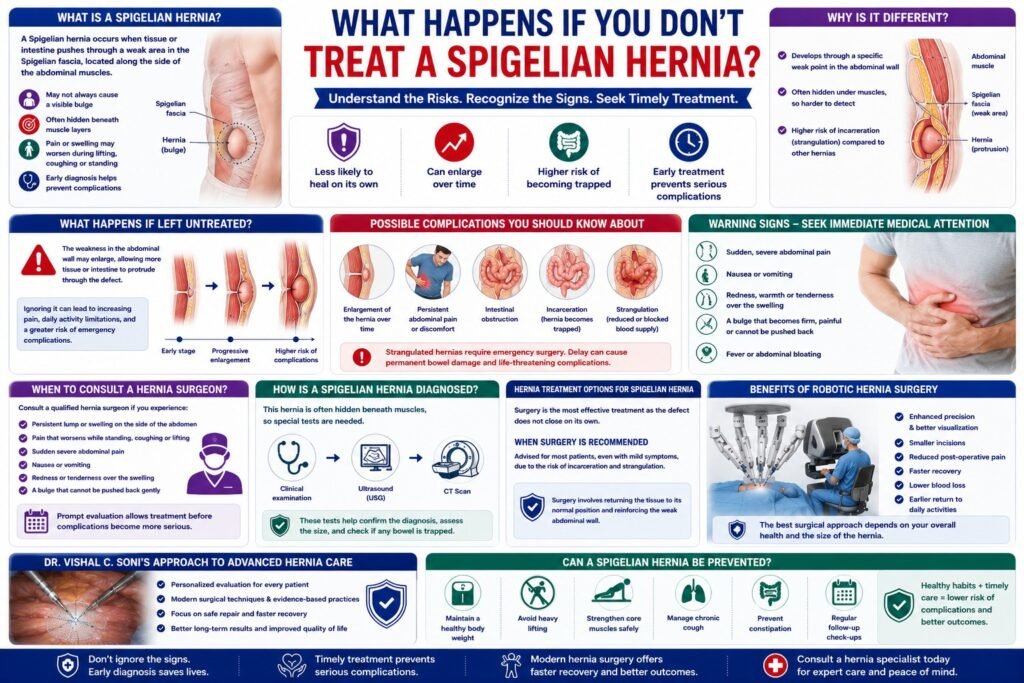
What Happens If You Don't Treat a Spigelian Hernia?
What Is a Spigelian Hernia?
A Spigelian hernia is a relatively rare type of abdominal wall hernia that develops through a weak area in the Spigelian fascia, a layer of tissue located along the side of the abdominal muscles. Unlike many other hernias, it may not always produce a visible bulge because it often lies beneath the muscle layers. This can make the condition difficult to recognize in its early stages, leading to delayed diagnosis.
People with a Spigelian hernia may experience localized pain, swelling, or discomfort that becomes more noticeable during activities such as lifting, coughing, or prolonged standing. Since the symptoms can be subtle, it is important not to ignore persistent abdominal pain or an unexplained lump. Early evaluation helps identify the condition before it progresses and reduces the risk of serious complications.
Why Is It Different from Other Types of Hernias?
A Spigelian hernia develops through a specific weak point in the abdominal wall rather than the more common groin or belly button areas. Because it is often hidden beneath muscle tissue, diagnosing it may require careful clinical examination and imaging studies.
Another important difference is that Spigelian hernias have a relatively higher risk of becoming trapped, making timely medical attention essential.
What Happens If a Spigelian Hernia Is Left Untreated?
Unlike some hernias that remain stable for long periods, a Spigelian hernia is less likely to heal on its own. Over time, the weakness in the abdominal wall may enlarge, allowing more tissue or intestine to protrude through the defect.
Ignoring the condition can result in increasing pain, difficulty performing daily activities, and a greater chance of emergency complications. This is why early hernia treatment is strongly recommended once the diagnosis is confirmed.
Possible Complications You Should Know About
If left untreated, a Spigelian hernia can lead to:
- Enlargement of the hernia over time
- Persistent abdominal pain or discomfort
- Intestinal obstruction
- Incarceration, where the hernia becomes trapped
- Strangulation, where blood supply to the intestine is reduced or blocked
Strangulated hernias require emergency surgery because delayed treatment can result in permanent damage to the affected bowel.
Common Signs That Need Immediate Medical Attention:
Although symptoms vary, certain warning signs should never be ignored.
When to Consult a Hernia Surgeon?
Consult a qualified hernia surgeon if you experience:
- A persistent lump or swelling on the side of the abdomen
- Pain that worsens while standing, coughing, or lifting
- Sudden severe abdominal pain
- Nausea or vomiting
- Redness or tenderness over the swelling
- A bulge that cannot be pushed back gently
Prompt evaluation allows treatment before complications become more serious.
How Is a Spigelian Hernia Diagnosed?
Because this type of hernia is often hidden beneath the abdominal muscles, diagnosis may require more than a routine physical examination.
Clinical Examination and Imaging Tests
Your doctor will review your symptoms and perform a detailed abdominal examination. Ultrasound or CT scans are commonly used to confirm the diagnosis, determine the size of the hernia, and assess whether any bowel has become trapped.
Accurate diagnosis helps doctors plan the most appropriate hernia treatment based on the patient’s condition.
Hernia Treatment Options for Spigelian Hernia
Once diagnosed, surgery is generally the most effective treatment because the defect in the abdominal wall does not close on its own.
When Surgery Is the Recommended Treatment
Surgical repair is advised for most Spigelian hernias, even when symptoms are mild, due to the increased risk of incarceration and strangulation. The procedure involves returning the protruding tissue to its normal position and reinforcing the weakened abdominal wall.
Benefits of Robotic Hernia Surgery for Spigelian Hernia
Advances in minimally invasive techniques have made robotic hernia surgery an effective option for many suitable patients. This approach offers enhanced precision, better visualization, and improved instrument control, allowing surgeons to perform delicate repairs with greater accuracy.
Potential benefits include:
- Smaller incisions
- Reduced post-operative pain
- Faster recovery
- Lower blood loss
- Earlier return to daily activities
The most appropriate surgical method depends on the patient’s overall health, the size of the hernia, and clinical findings.
Dr. Vishal C. Soni’s Approach to Advanced Hernia Care
Early diagnosis plays an important role in preventing complications associated with Spigelian hernias. Dr. Vishal C. Soni follows a patient-centered approach, carefully evaluating each case to recommend the most appropriate treatment based on the patient’s condition. Using modern surgical techniques and evidence-based practices, the focus is on safe repair, faster recovery, and long-term results.
A Spigelian hernia should never be ignored, even if the symptoms appear mild. Seeking timely medical care can prevent serious complications, simplify treatment, and help patients return to their normal routine with greater comfort and confidence.